
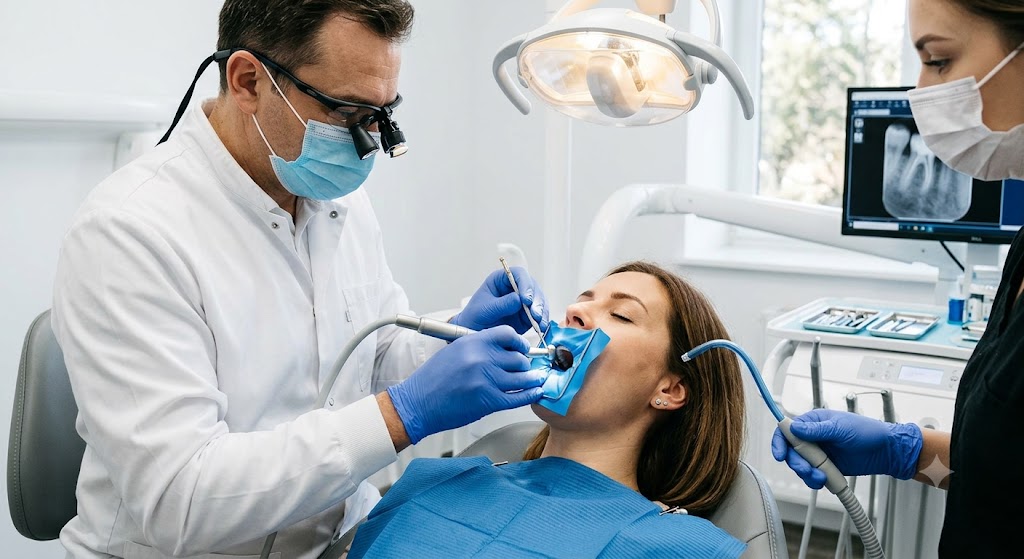
Root Canal Treatment in Archway: What Patients Should Know
Pain in the teeth can affect basic tasks such as eating, drinking and sleeping. If you are suffering from persistent tooth pain, sensitivity to hot or cold foods, or swelling near a tooth, you could be suffering from an infection that would require professional dental attention. In some cases, root canal treatment can be an option to treat the infected tooth.
Knowing what root canal treatment is can be reassuring when seeking dental treatment. Whether you are having tooth pain or undergoing treatment, it is important to know what root canal treatment entails.
At Blue Light Dental Clinic, patients seeking to get information about root canal treatment in Archway will get answers regarding the procedure, its advantages and recovery.
What Is Root Canal Treatment?
The root canal treatment process is a dental operation that involves the treatment of an infection or inflammation within a tooth. Below the enamel and the dentine lies a soft tissue known as dental pulp, which comprises of nerves and blood vessels.
Whenever bacteria penetrate the pulp due to deep tooth decay or injury, there may be an inflammation and/or infection. If not properly addressed, an infection could eventually spread to the surrounding areas and even lead to a tooth abscess.
The infected and the damaged pulp is removed in the root canal process where the tooth is cleaned out and the root canals sealed to help avoid future infections. The objective of such treatment is to keep as many of your natural teeth as possible.
What Are the Signs You May Need a Root Canal?
Recognising the symptoms of a possible dental Examinations can help you seek treatment before the problem becomes more serious.
Common warning signs include:
- Persistent toothache: Ongoing or severe pain may indicate inflammation or infection inside the tooth.
- Sensitivity to hot and cold: Pain that lingers after consuming hot or cold food and drinks may suggest damage to the dental pulp.
- Pain when biting: Discomfort when chewing or putting pressure on a tooth can be a sign of an underlying problem.
- Swollen or tender gums: Inflammation around a particular tooth may indicate infection.
- Tooth discolouration: A tooth that becomes darker than neighbouring teeth may have experienced internal damage.
- A gum swelling or pimple: A small bump near a tooth may indicate an abscess or an area where infection is draining.
However, not all teeth infections exhibit visible signs. At times, the presence of an infection is discovered by a dentist during regular checkups or X-rays.
In case you experience any of these signs, schedule an appointment for an oral exam as soon as possible. Facial swelling, fever, and inability to open your mouth require immediate medical attention.
How Does Root Canal Treatment Work?
If you require root canal therapy in Archway, knowing what the process entails can help you feel better prepared for your visit.
1. Dental Examination and Diagnosis
Your dentist will ask about your symptoms and examine the affected tooth. In some cases, dental x-rays may be done to examine the root, bone structure and extent of the infection.
This is important in helping to determine if root canal therapy is the right treatment or if another treatment is more suited.
2. Local Anaesthetic
Local anaesthetic is administered to numb the area before any treatment takes place. This helps reduce any pain associated with the treatment.
You may feel some pressure and movement during the procedure, but it is usually well-tolerated.
3. Removal of the Infected Pulp
A small opening is made in the tooth to provide access to the pulp chamber and root canals.
4. Cleaning and Disinfection
Cleaning and shaping of the root canals and their disinfection are carried out to get rid of bacteria and damaged tissues. This stage is very important because it reduces the risk of developing an infection.
5. Filling and Sealing the Root Canals
After cleaning, the canals are filled with a proper dental material and closed to protect them from bacteria.
6. Final Restoration
The tooth needs either a permanent filling or a dental crown depending on the amount of healthy tooth tissue left.
Dental crowns are required when the tooth is seriously weakened due to decay or previous damages. They strengthen the tooth and protect it from further damage during biting.
Your dentist will advise you on the right restoration method and its proper timing.
Is Root Canal Treatment Painful?
One of the issues that people have when it comes to getting a root canal is that of pain during the process. Although many fear that the treatment will be painful due to the nature of the procedure, there are many methods employed today that have helped to reduce the discomfort associated with it.
In reality, root canal treatment is meant to alleviate the pain brought on by the inflammation of the pulp tissue.
Following the treatment, you can expect some amount of tenderness and discomfort lasting a few days, especially if the area around the tooth was already inflamed prior to the procedure. Your dentist can give recommendations on pain medication.
How Long Does Root Canal Treatment Take?
The duration of a root canal procedure will vary based on the tooth in question, the complexity of its root canals, and the seriousness of the infection.
Some procedures will take place in one sitting, while other procedures might take two or more sittings. For instance, molars tend to have more complicated root canals than front teeth.
In case you need multiple sessions to complete the procedure, then your dentist will inform you about that and let you know whether a temporary filling will be used during the session. It is necessary to follow the treatment advice and plan your next steps as advised.
What Are the Benefits of Root Canal Treatment?
Root canal therapy is associated with various advantages when a tooth can be saved.
Preserves Your Natural Tooth
Saving your natural tooth maintains your biting force and chewing efficiency. Moreover, it may prevent you from the need for an urgent tooth replacement.
Helps Relieve Dental Pain
Due to the removal of infected or inflamed pulp tissue, root canal therapy may eliminate one of the sources of tooth pain.
Helps Prevent the Spread of Infection
Eliminating decay and sealing root canals will help to manage the spread of an infection.
Maintains Your Smile
Your natural tooth can help keep your smile unchanged.
May Reduce the Need for More Extensive Treatment
If the treatment is successful, it will allow you to avoid more complex dental treatments, such as extractions, followed by dental implant, bridge or denture.
Depending on the condition of a tooth and the surrounding structures, the appropriateness and results of the procedure may vary.
What Should You Do After Root Canal Treatment?
Proper aftercare can help support healing and protect your treated tooth.
Follow these recommendations:
- Follow your dentist’s instructions carefully.
- Avoid chewing on the treated tooth while it is numb.
- Choose softer foods if the tooth feels tender.
- Brush twice daily with fluoride toothpaste.
- Clean between your teeth every day.
- Take any recommended medication according to your dentist’s advice.
- Attend follow-up appointments and arrange your permanent filling or crown when advised.
Avoid biting very hard foods with a tooth that has a temporary filling or has not yet received its recommended final restoration.
If swelling develops, your pain increases or your temporary filling comes out, contact your dental practice for advice.
Can a Tooth Last After Root Canal Treatment?
Yes. A successfully treated and well-restored tooth can work for many years. There are some root-treated teeth which are working for several decades but no treatment gives a guarantee for lifetime.
The success of root canal treatment depends on such factors as the amount of remaining healthy tooth tissue, quality of root canal filling and the final restoration as well as your oral hygiene.
Regular dental check-ups allow your dentist to observe the condition of the treated tooth and detect possible problems at an early stage.
Root Canal Treatment or Tooth Extraction: Which Is Better?
The choice between two procedures depends on whether the affected tooth can be restored and maintain its health after treatment.
Root canal treatment is intended for preservation of the natural tooth through removal of infection from inside it. Tooth extraction means removal of the tooth and may be needed in case of severe fracture or extensive damage of the tooth and inability to restore it reliably.
Your dentist will inform you about the benefits, limitations, cost and expected results of each procedure.
Preservation of the natural tooth is usually preferable but sometimes extraction may be a better choice.
How Can You Reduce the Risk of Needing a Root Canal?
Although not all dental infections can be prevented, good oral hygiene and regular dental care can reduce the risk of advanced tooth decay.
Simple habits can make a difference:
- Brush your teeth twice a day with fluoride toothpaste.
- Clean between your teeth daily using floss or interdental brushes.
- Limit frequent sugary snacks and drinks.
- Attend regular dental check-ups.
- Seek advice early if you experience toothache or persistent sensitivity.
- Protect your teeth during contact sports by using an appropriate mouthguard.
Treating tooth decay early may help prevent bacteria from reaching the dental pulp and reduce the need for more complex treatment.
Choosing Root Canal Treatment in Archway
If you are having constant tooth pain or are told that you have a tooth requiring root canal treatment, then scheduling a dental appointment can be an essential move to make.
The dentist will examine your problem tooth, determine its cause, and recommend treatment options to you. Treatment may take the form of a filling procedure, root canal therapy, a crown procedure, or extraction of the problem tooth.
In the case of a patient in Archway who needs information regarding the options for treating the problem with root canal therapy, the Blue Light Dental Clinic is the best place to visit.
Scheduling dental appointments early enough can prevent dental problems from escalating into more serious situations.
Book a Dental Assessment at Blue Light Dental Clinic
Root canal treatment can help preserve a natural tooth, relieve symptoms caused by infection and restore normal chewing function when the tooth is suitable for treatment.
If you have persistent toothache, sensitivity or swelling, do not ignore the symptoms. A dental assessment can help identify the cause and determine the most appropriate next step.
Visit Blue Light Dental Clinic to learn more about root canal treatment and discuss your dental care options.
